What’s a farm, anyhow?
We just went to Remlinger Farm in Carnation for a concert this past weekend. Despite the bucolic landscape and old-timey signage, not a lot of crops could be found during our stroll of the land. It seems that they primarily run a music venue and an amusement park while using their historic name to brand a lot of value-added goods and junk food in their little market store. So, are they still a farm? Okay, I’ll give them the benefit of the doubt and assume they’re still growing crops, but the example raises a bigger question.
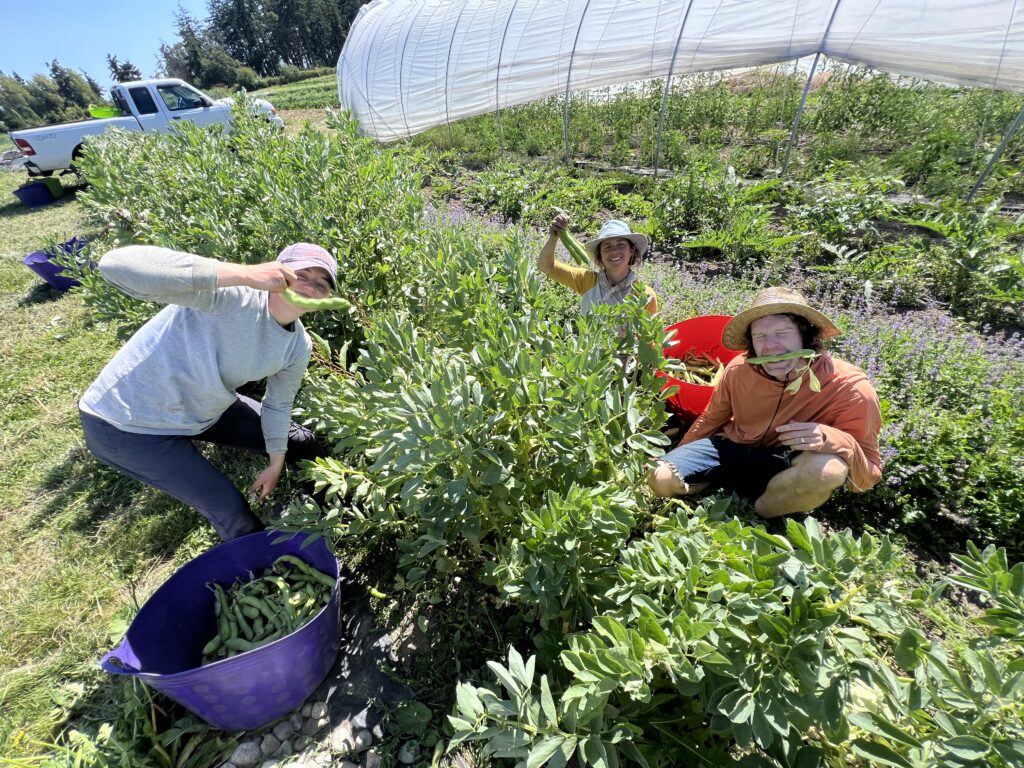
When is a farm an actual farm and when it is just evoking farmy feelings? As farmers, we hear the word ‘farm’ tossed around in some dubious contexts. Is a historic farm that now just sells tickets to hay rides and corn mazes still a farm? On the other side of the scale, are nature-loving people with a couple horses and big garden actually farmers? And if they’re not farmers, would you call their land a farm? The dilution of the meaning of farming into a plethora of other activities, both commercial and hobbyist, has potential impacts beyond the mere academic discussion of language.
The dictionary defines farm as: (noun) “an area of land, together with a house and buildings, used for growing crops and/or keeping animals as a business” or (verb) “to make one’s living by growing crops or keeping livestock.” Good.
I think it’s important to keep food production at the center of the definition of farm for two main reasons. 1) Farmers deal with a specific set of technical and economic challenges that gardeners, equestrians, concert venues and other land use operations do not. Farming is often more challenging and riskier than these other operations and should not have to compete with non-farms for loans, grants and stipends. 2) Many people have an overly romantic vision of what a farm is. This is largely because the farms they’ve visited are not actually farms but rather large swaths of land with maybe a barn and a couple cows.
The USDA defines a farm as the following. A farm is any place from which $1,000 or more of ag products are sold within a year. Island County uses a similar benchmark to qualify property in the Current Use program which provides a significant property tax reduction. These definitions are too lenient for me as they’re often as loop holes to gain tax breaks. I like the FSA requirements better which considers a mix of percent household income made from the land as well as labor hours.
Anyhow, we’re not trying to warp the English language to our personal desires, but it’s an interesting exercise to consider what we mean by farms and farming. Let’s work to keep food production central to our discussion of what farming is and should be.