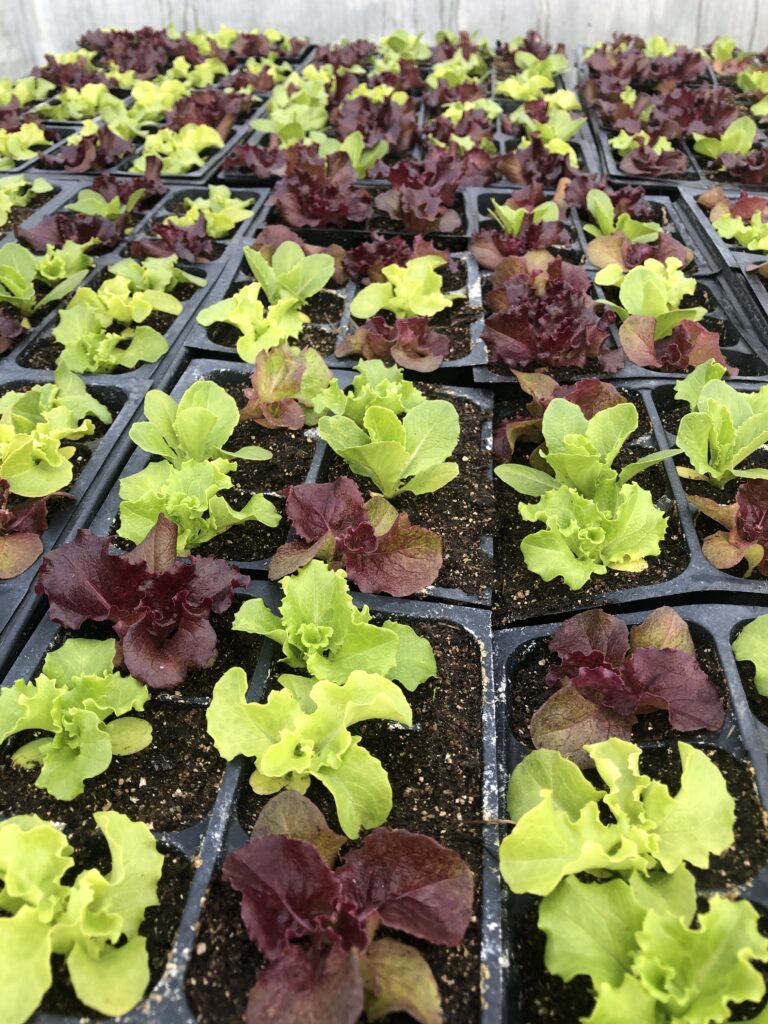
Plants want to grow! Once those little green machines sprout in the ground, there seems to be no stopping them. But what about getting them to germinate in the first place? This might be trickier, as each seed type has different environmental preferences. The seed starting basics:
Water – Once in soil, seeds want to stay moist. Too wet they will rot, too dry and the water can’t penetrate their hard seed coat. If bone dry is 0% soil moisture and drenched is 100%, it’s ideal to keep you soil between 50-75% moisture. That usually means watering once a day in the cloudy spring, and twice a day later in the season. Make sure you’re soaking the soil least 1” deep so that the little seedling roots can easily grow downward.
Temperature – Each species has a different optimal temperature for germination at which the seed will sprout in the fewest days. Go above or below this temp and the number of days for germination will increase. Too hot or cold, the seeds won’t sprout at all and may rot in the soil or go dormant. A good average temperature for most veggie seeds is 70F. We use heat mats set at this temp in our greenhouse to start our seeds, and stop using them altogether by the end of May or when the ambient temps are about 70F. While we recommend mats for heat-loving solanaceous crops, most cool season crops, like kale and lettuce, will germinate just fine at 55F. Keep in mind that the heat mats are only for germination. After germinating, remove plant from heat to continue growing at ambient greenhouse temp.
Light – We start our seeds in a greenhouse. Here they are exposed to natural light fluctuation. A bright south-facing window can also be a good option. Some sites don’ have a much sun exposure, especially in late-winter/early spring, so you may opt to start seeds indoors under grow lights. It is important to use full-spectrum lights with a high lumen output, and to also have a timer that runs 12-16 hours a day. If your seedlings are getting leggy it’s likely that they are not receiving enough light!
Remember its always an option to start seeds directly in the ground once soil temperatures are sufficiently high and the ground is easily worked! Around here, early March is the absolutely earliest to direct sow those cool-season crops.
You got this!