Posted on

Potting Soil or Seed Starting Mix – What’s the Difference?

Before going to farm school, I didn’t know the difference between soil for germinating seeds, soil for filling raised beds, compost or the dirt in my backyard. The assorted soil products seemed to me an elaborate marketing scheme. How wrong I was! Turns out, if you start your seeds in optimal soil conditions they’re going to make happier, more productive plants down the road. We’ve learned that (and most farmy things) the hard way so you don’t have to.

Michigan State University Extension explains the difference between potting soil and seed-starting mix. “Soilless seed-starting mixes have a finer texture and are made from ingredients such as milled peat moss, perlite, coconut coir fiber and vermiculite. Although potting soils may be used to start seeds, they tend to have a more-coarse texture and may contain field soil, compost or composted manure along with vermiculite, peat moss or perlite. Some seed-starting or potting mixes may contain fertilizer as an additive. Some products contain enough fertilizer to provide seedlings with sufficient nutrients to last up to three months, while others may have no added nutrients.”

Ask your trusted local nursery for what they recommend for seed starting or try your hand at making your own germination blend using this recipe from OSU Extension: https://extension.oregonstate.edu/news/make-your-own-seed-starting-mix-winter-prep.

Posted on

How to Choose the Best Tomato Variety for your Goals and Growing Conditions

Now through mid-April is the ideal time to start those tomato seeds indoors. However, with literally thousands of varieties in the tomatoverse, choosing the ideal tomato for your garden can get beyond overwhelming. We’re here for you! Below you’ll find some basic tomato terms, traits and tips to help your search for Solanceous success.  Whatever your tomato growing goals, your efforts will be aided if you buy from a local seed company that either grows their own seed or sources from other regional growers. Many tomato varieties available on the internet and box stores require way more heat units than the Pacific Northwest provides.

Organic, Non-GMO Tomato Seed

When choosing which varieties to grow, a good first question to ask yourself is, “Do you prefer a tomato that only grows 2-4 ft tall and requires minimum trellising?”. If so, you want a determinate variety! Once determinates reach a specific size they stop growing and focus all their energy on fruit production. Fruits will ripen over a concentrated timeframe of 2-4 weeks. These are the best options for short seasons or for sites lacking full sun.

If trellising, plant height and sun availability aren’t issues for you, consider Indeterminate varieties, which grow continuously so long as they have sufficient light, water and nutrients. A trellis is necessary to keep these plants upright, as many will reach 8+ feet in a greenhouse. Pruning is also recommended to maintain airflow, reduce disease and direct the plants’ energy toward fruit production. All this added work pays off in much higher yield potential over a span of 2+ months.

Cherry Tomatoes

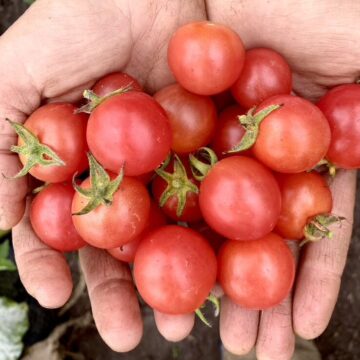
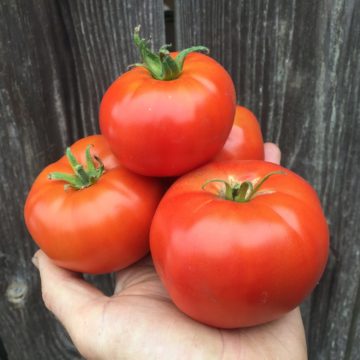
The next question to consider is, “What size fruits do you crave?”. Do you enjoy small fruits to add to salads or large fruits to cut onto BLTs? Our smallest class of tomatoes are the cherries (0.5-1oz), which are the sweetest and a pure delight to snack on fresh off the vine. Next are the plums/romas/saladettes (2-4oz), which have a variety of uses from salads to sauces. Then there are your ol’ big slicers (4oz+), which are the beloved heirlooms and a dream on sandwiches and on the grill.

Organic, Non-GMO Tomato Seed

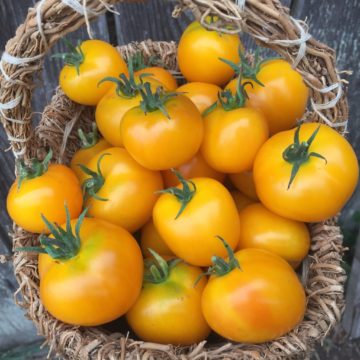
Finally, flavor. What makes your taste buds happy dance? While this category is subjective, there are a few basic factors to consider. Yellow tomatoes are often less acidic and milder, while darker purple/brown hues offer a more earthy, complex flavor profile. Red tomatoes are considered in the middle with a good balance of acidity and sweetness. Pinks, oranges and greens have their own tangy, unique and sweet traits that vary wildly variety to variety.

It’s hard to go wrong with a homegrown tomato, but it’s fun to consider the sauce-abilities!!

Check out our blog on Tomato Tending for more tom tips! Our Tomato Variety Comparison Chart provides a nice visually summary of all Deep Harvest Seeds tomato variety traits.

Posted on

Featured Crop: Doe Hill Pepper

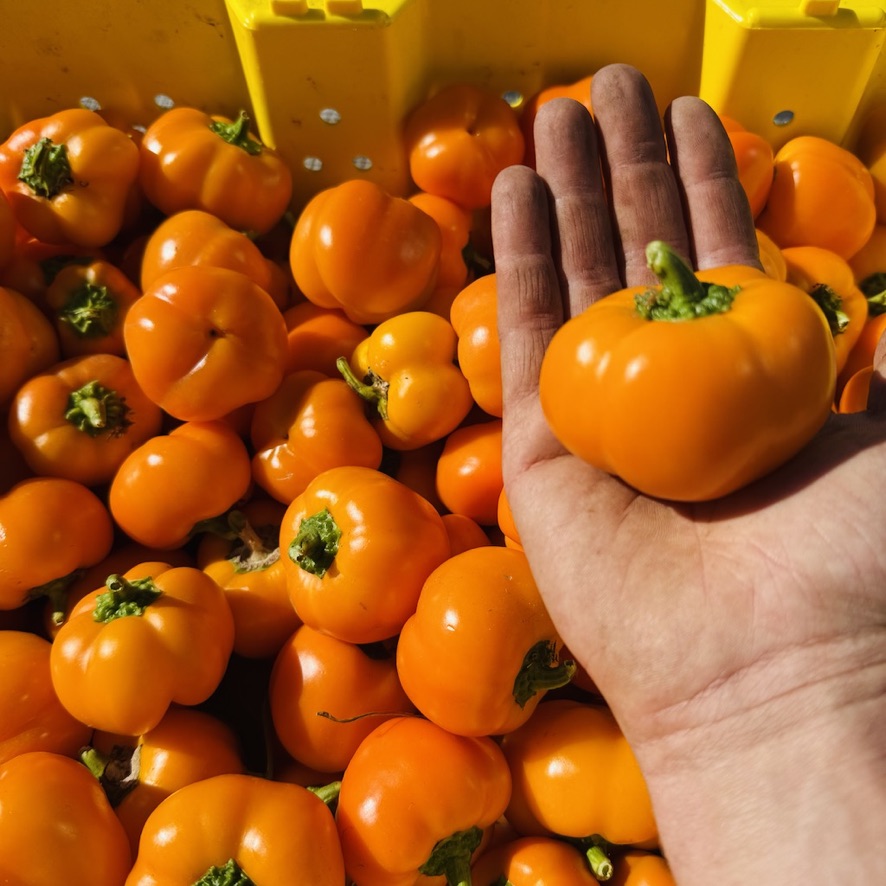
For the last few years, we’ve been in pursuit of a medium sweet pepper variety that 1) makes a lot of peppers 2) actually ripens a lot of peppers and 3) is crunchy and sweet. We trialed over a dozen varieties and found a diamond in the rough, a unicorn, a pot of gold at the end of the rainbow… Da da da dum! Meet… Doe Hill! She’s all that and a bag of chips. Doe Hill Pepper hails from 19th century Appalachia, but comes to us thanks to our pals at Uprising Seeds. She’s strong and mighty, and thus doesn’t need a lot of support while still pumping out the early fruits.

Posted on

Is My Soil Ready To Plant?

Consider these important factors before popping seeds into the soil:

1)    Soil temperature: Most seeds aren’t going to be thrilled if their future home is below 50 degrees. Who’s to blame ‘em? Brrrr. Get yourself a soil thermometer and find out if you’re in that temperature ballpark before direct sowing most things. The exceptions are poppies, larkspur, sweet peas and calendula which are more-cold hardy than their flower friends. Kale, radish and arugula are the cool guys of vegetable town.

2)    Soil Moisture: Take a handful of soil about 6″ deep and squeeze it. If it forms a wet, slippery ball and excess water oozes out, the soil is still too wet to work. If it forms a weak ball that breaks apart easily, you’re ready to go!

3)    Ground cover: If your soil still has cover crop, grass, weeds, or other active plant life growing it, hold up! Your precious seed babies can’t compete for light and nutrients with plants that have an unfair head start. There are also likely a bunch of little munchers (Slugs! Ahh!!) hiding out in that matter. Pull the material out or chop it up and allow time for it to decompose. Large chunks of dead plant debris will also bind up nitrogen in the soil. Bacteria will use it to grow, multiply and further break down the plant matter.

If you want to expedite warming and decomposition, you could try tarping, building raised beds or double digging. Tillage also helps speed things up by breaking down plant tissue and oxygenating the soil. However it comes with a host of drawbacks for soil heath, so use judiciously! We use a few silage tarps ourselves to keep the soil a little drier and warmed up for early spring crops. Once we’re out of March, we prefer to keep our plastic use to a minimum and let our sheep eat down cover crop, before doing some light bed prep with the ol’ tractor.

Posted on

Meet Midnight Crunch Lettuce! A Deep Harvest Original.

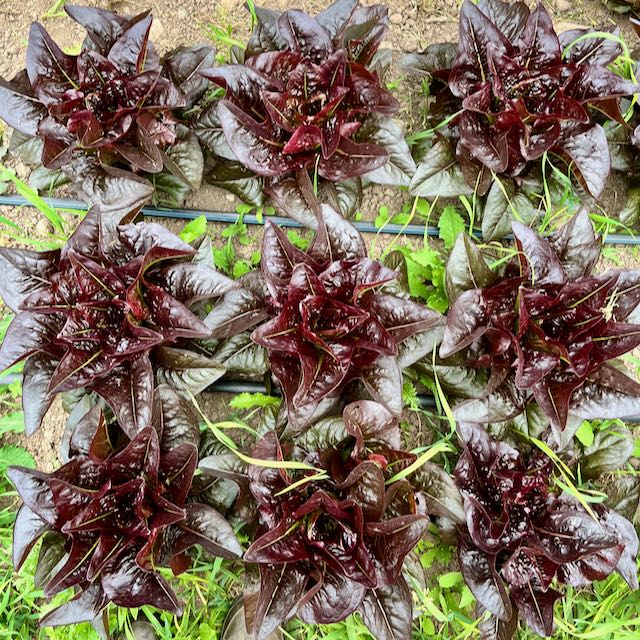
We’re more than excited to release this shiny new lettuce in the wild. Introducing… Midnight Crunch! An upright, dark burgundy-colored deer tongue variety with excellent market potential. Adds beauty to your farmers market display or mixed with other salad greens. This year, we tested the finished product on unwitting CSA members and received rave reviews! “So stunning!” “So crunchy!” “Wow, that color!!!”

Midnight Crunch was first conceived down in fields of Wild Garden Seeds, where lettuce breeder Frank Morton made crosses of several varieties including Deer Tongue, Merlot, Crisp Mint and Reine d’ Glaces. He sold the resulting seed from these crosses through his catalog under the name “Freedom Mix.” This was a gift to potential plant breeders or folks simply fascinated with lettuce diversity. (You can find several other diverse breeding populations with different parentage on Frank’s website). We planted the “Freedom Mix” back in 2021 and saved seed from several plants that exhibited unique, upright red romaine traits. Since then, we have replanted the seed every year and made selections on our favorite plants, eliminating traits such as bitterness, spines on the ribs, tip burn and early bolting.  We think you’ll love the results.

Posted on

Succession Planning for Garden Success

I’m sure I’m the last one on earth to notice, but I’m still pretty pumped to find “success” in the word succession. Obvious? Yep. Cheesy? Mm-hmm. But accurate? 100%! Especially if you want tender, tasty greens in your garden for the long haul.

You don’t need to focus on succession planting in your first year of gardening, but as you hone your skills its importance is evident of you don’t love bolted lettuce salads and hard-to-chomp chard come mid summertime. The nitty gritty of succession planting is that we need to plant some crops more than once in order to eat (and actually enjoy) them for prolonged harvest periods.

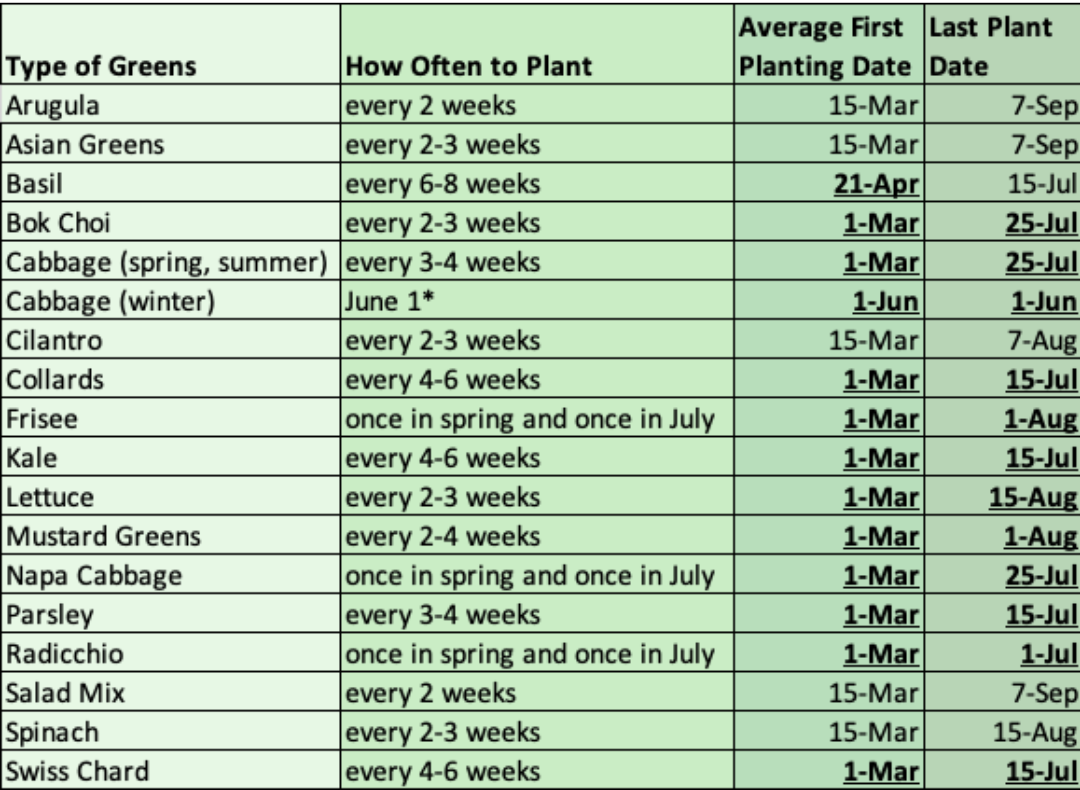
The chart below demonstrates how often we plant various greens to keep them at optimal flavor and texture for our customers. Most gardeners can get away with extending these timeframes if you keep them well fertilized, don’t pick your crops super hard or don’t mind them a bit spicy, bitter, or tough. Many tender, annual greens (arugula, mizuna, tatsoi), however,  can’t be extended even with  extra TLC, as biology compels them to bolt after a few weeks.

Dates underlined in bold indicate that we recommend starting plants indoors and transplanting them out in 2-3 weeks. Indoor seeding is ideal when cool soil temps inhibit outdoor germination. We also start all bunching/heading greens (kale, chard, collards, cabbage, radicchio, head lettuce) indoors no matter the season, as we like to space the transplants with precision in the bed to optimize yields and harvest efficiency.

Look out success. Here you come!

Posted on

February is the Time to Seed Your Alliums

Garden enthusiasts, start your engines. On your marks, get set…. SEEEEED. No really, we’re truly ok with you starting now, but ideally only alliums (and perennial herbs and flowers). February through mid-March is indeed the ideal window to start your onions, leeks, and scallions indoors. Yee haw! Here we go.

At Deep Harvest, allium seeding entails planting seeds in seed starter mix at 1/4-1/2 inch deep, about five seeds per inch in rows in open flats. We place the flats on heat mats set around 55F°, but remove them when germinated. Too long on the heat is seriously stressful for those tender babies. Once plants are about 6 inches tall, we give them a couple inch haircut (aww) and allow them to continue sizing up until outside soil temps hit 50F°. Then it’s out of the nest and into the great wide open to fend for themselves. Don’t worry, you’ve raised them right!  At this point, we trim the roots to ½-1 inch long so they don’t J-root in the soil when planted and we even give ‘em a little liquid fertilizer dunk. Plants are pushed in about one inch to cover their roots and plant bases and are spaced at about 5 inches in rows 12 inches apart.  That’s all there is (all-lium there is?) to it, folks!

Posted on

Add Intrigue to Your Garden this Year

I don’t know about you, but we’re feeling itchy to mix things up a bit over here in farmlandia. Stir the pot. Reinvent. Evolve. Give the farm plan a “glow up” (as the kids say). An extreme makeover! Or even just a little one. Something to get the blood pumping, the heart racing, the hips shaking. Yes, as usual, the metaphors are going on too long, but you know what I mean! We have ideas to get us enthused about farming a 16th year that we think you might like to apply to keep your gardening or farming fresh, too

For one, we’re planning more farm trials than ever. Instead of just growing one cool looking grape tomato, honeydew melon, or snapdragon, we’re going to grow a dozen or more (you could even just do two or three). We’ll then put on our metaphorical lab coats to discuss the attributes and flaws of each. This is a quick way to learn if you need to change how you’re growing a crop (improve the soil, increase spacing, etc.) or if there’s simply a more optimal variety for your conditions. Sometimes it’s not you, it’s the variety you chose. Isn’t that a relief?

Two, we’re going to grow some out of the box crops we’ve never grown before. Last year, we tended two giant pumpkins that quickly became precious members of our family and the hottest ticket on our farm tours. This year, we have our eyes on growing celtuce (aka stem lettuce), turmeric, and cucamelons- all for the first time. Uncommon things you could cultivate from our seeds include yellow watermelon, Chinese Pink cutting celery, quinoa (it’s shockingly happy in the PNW) or ground cherries (the kids in your life will thank you).

Three, we’re going to build some infrastructure to make our work more pleasurable. Exhibit one- a root washer. Yah… so… we should’ve done that 15 years ago, but still – it will be mighty welcome after washing tens of thousands of roots without one! Worm bins, cloches, arches, trellises, raised beds or new pathways, are all ways you could add to your growing capacity and gardening good vibes.

Whatever we all do, let’s make this growing thing enjoyable. Tending produce and flowers for ourselves and community is not only utilitarian, but is also an honor and the deepest of joys when we set ourselves up to make it so.

Posted on

Early January is Time to dream not to Plant!

Howdy-do, gardening friends! It’s time for our near-annual public service announcement about weather, microbes and patience. Let us explain. While it’s easy to celebrate the rare sun fleck breaking through our January perma-cloud, don’t let that excitement lead to rash seed sowing. This time of year in western Washington our soil temps hover in the low 40s, too cold for even the hardiest seeds to thrive. Those that do manage to sprout encounter rain, frost, slugs, fungal disease and, most importantly, an absence of sunlight which threaten seedlings’ chance of survival.

We used to start our CSA in early May and pride ourselves on being early to farmers markets with carrots, broccoli and zucchini. But over the years we learned battling cold temps and early spring pests led to too much crop loss, burn-out, wasted seed, and damaged soil to justify the marginal early season gains in profit. Here on Whidbey Island, we now don’t direct sow much of anything outdoors until early April or March if it’s in a greenhouse.

So, what does this mean for you and your grand gardening goals? January is best for dreaming and scheming.  Perhaps build a new compost or worm bin, take a soil test, or level up your succession planting plan with some spreadsheets.  Research all the wonderful varieties offered by your regional seed companies and plan a mini variety trial.

Okay, so if January is off-limits for planting what about the rest of winter? February is perfect for starting onions and leeks indoors. March is ideal for starting tomatoes, peppers and eggplants indoors as well as hardy brassicas. If you have a greenhouse, you could begin direct seeding some greens and root crops. If these crops succumb to our NW winter blues, don’t fret, just try again in April! Our comprehensive NW planting calendar can be found here.

Posted on

Plants for People and Pollinators

If you’re having trouble deciding what to grow this season, here’s a gratifying option to living up your landscape: plant things both people and pollinators adore! You can share!!

Get this, many veggies and herbs will go on to flower and attract a myriad of beneficial insects if you leave ‘em the ground long enough to do so. You’ve probably discovered this phenomenon all on your own, forgetting about that old arugula or salad mix until after it’s bolted and flowered and then – boom- it’s suddenly abuzz with life!
We often leave entire beds of broccoli and cilantro to continue growing waaayy past their harvest window (on purpose- no really!!), inviting in a diversity of bees, flies and beetles that in turn pollinate our other food crops and prey on pesky pests like aphids, mites and caterpillars.  Over-mature crops can even help to bolster native pollinator populations, many of which are in decline due to habitat loss and a lack of floral resources. If you have the space and a tolerance for a slightly messier garden appearance, consider leaving the following crops in the ground beyond the point of edibility:

Cilantro, Dill and Parsley: These three herbs are in the family Apiacea, known for its “umbel”-shaped flower heads which can attract a wide diversity of beneficial bees, syrphid flies and parasitoid wasps, which prey on aphids!! After cutting these plants back a few times for food they’ll start to bolt and flower. Just sit back and enjoy the magic!

Annual brassicas – arugula, mizuna, mustards, salad mix, tatsoi, choi sum and gai lan: These quick-to-mature leafy greens of the family Brassicacea are often the first to bolt in the garden, leading to a proliferation of white and yellow flowers. Bees or all shapes and sizes including honey bees, bumble bees, sweat bees and mason bees will find their way to these flowers.

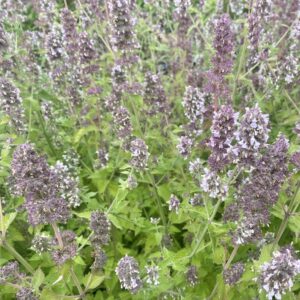
Basil, Holy Basil and Catmint – These herbs are in the Mint family, producing spikes of gorgeous, purple flowers that bloom a good long while. Pinch the first few flowers off your basil plants to encourage branching, which will yield more pesto for you and flower production for the pollinators.

Edible Flowers The blooms of Calendula, Borage, Bachelor Buttons and Nasturtiums are all edible, adding bright colors and subtle flavor to your summer salads, drinks, and party cakes. They also happen to be some of the best pollinator crops out there! The butterflies and their friends will thank you (in their own subtle way).

One final word to the wise. While leaves and stems lead to flowers, flowers happen to lead to (drum roll, please)…seeds! Keep an eye on those plants as they’re blooming and consider yanking them before the first seed pods start drying down to prevent seed dispersal in your garden. That is, unless you want to try saving your own seeds or don’t mind volunteers next spring!