I’m sure I’m the last one on earth to notice, but I’m still pretty pumped to find “success” in the word succession. Obvious? Yep. Cheesy? Mm-hmm. But accurate? 100%! Especially if you want tender, tasty greens in your garden for the long haul.
You don’t need to focus on succession planting in your first year of gardening, but as you hone your skills its importance is evident of you don’t love bolted lettuce salads and hard-to-chomp chard come mid summertime. The nitty gritty of succession planting is that we need to plant some crops more than once in order to eat (and actually enjoy) them for prolonged harvest periods.
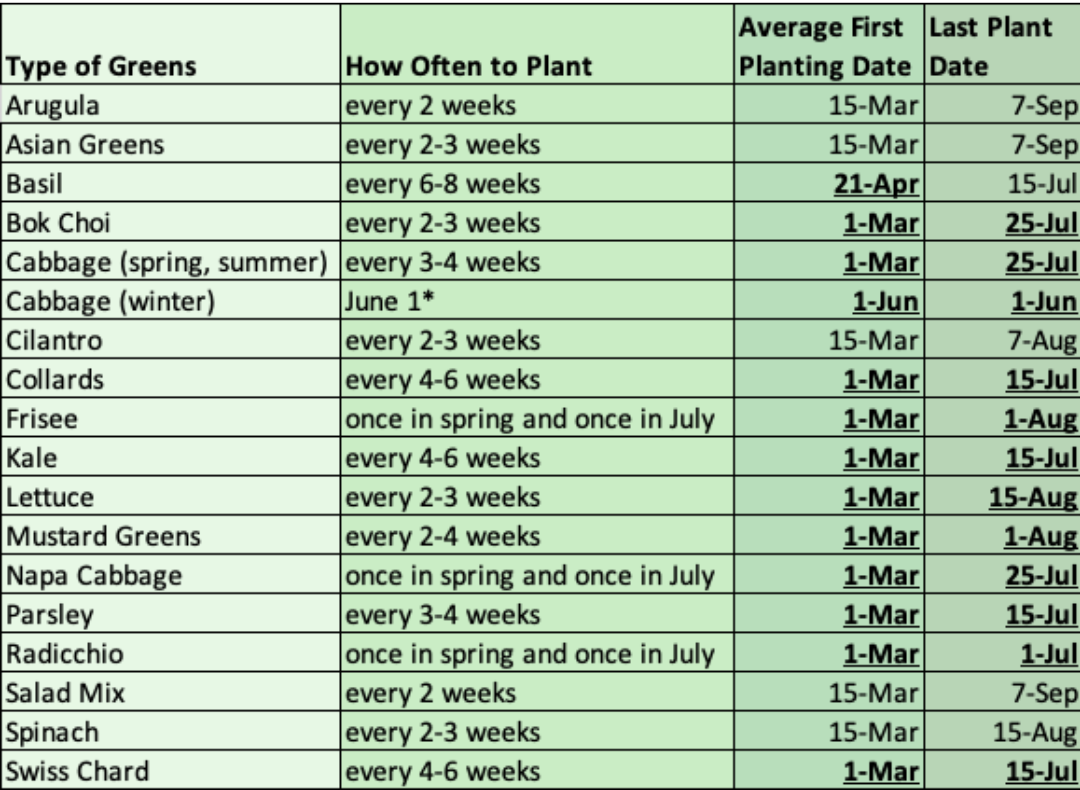
The chart below demonstrates how often we plant various greens to keep them at optimal flavor and texture for our customers. Most gardeners can get away with extending these timeframes if you keep them well fertilized, don’t pick your crops super hard or don’t mind them a bit spicy, bitter, or tough. Many tender, annual greens (arugula, mizuna, tatsoi), however, can’t be extended even with extra TLC, as biology compels them to bolt after a few weeks.
Dates underlined in bold indicate that we recommend starting plants indoors and transplanting them out in 2-3 weeks. Indoor seeding is ideal when cool soil temps inhibit outdoor germination. We also start all bunching/heading greens (kale, chard, collards, cabbage, radicchio, head lettuce) indoors no matter the season, as we like to space the transplants with precision in the bed to optimize yields and harvest efficiency.
Look out success. Here you come!