Posted on

Farm Weeds

It’s breathtaking: the naturally occurring biodiversity that magically appears to stake its claim on one’s organic field. Dozens of weed species, insect pests, and countess bacterial, viral and fungal diseases. Not to mention the vertebrates, which can’t be underestimated. These species put the ‘work’ in farming and keep us permanently on our toes. Here’s the first in a two-part series on the top tier nemeses that make their way into our daily farm lives. This week: Weeds! Next week: Diseases and Beyond!!! It’s a whimsical balance between letting all these scrappy cohabitants have their lunch and allowing us to make some cash.

WEEDS:
1. Hairy nightshade – Our most prolific and aggressive summer weed. Fast growing with a
strong root system, forming hundreds of small green berries packed with seeds.

2. Lambs quarter – A nutrient rich relative of spinach and quinoa, it’s our fastest growing weed and a producer of thousands of minuscule seeds per plant.

3. Canada Thistle – Our most existentially threatening weed. Thistle forms aggressive horizontal roots systems that are aggravated and spread from digging and tillage. In a pasture it may be managed by repeatedly mowing, but in annually worked vegetable fields there are no real organically-certified suppression methods. We tried tarping, digging, burning and an organic herbicide, which it all laughed off. Thus, we had to take one of our fields out of organic certification (and production) for the three years to spray a patch. It blows in every year from neighbors’ fields, and without a well-funded, county-wide management the problem with continue to worsen.

4. Field Bindweed – While this isn’t widespread on the farm, it has cropped up in a few locations and is spreading like wildfire. Like, thistle it forms spreading roots systems that we can’t figure out how to kill with organic methods. Unfortunately, we’re going to have to pull out two new beds of strawberries, because it has spread aggressively under the black plastic. We’ll put this area into pasture for a few years and mow it like crazy in an effort to wear this plant out.

5. Chickweed – Our most serious cool-season weed, but not a huge nuisance. Once the fall crops mature, we let chickweed run rampant. It doesn’t compete with the crops at that point and acts as a makeshift cover crop. It can be a pain though during our super long, wet springs.
Posted on

Small Farm Tractor Implement Talk

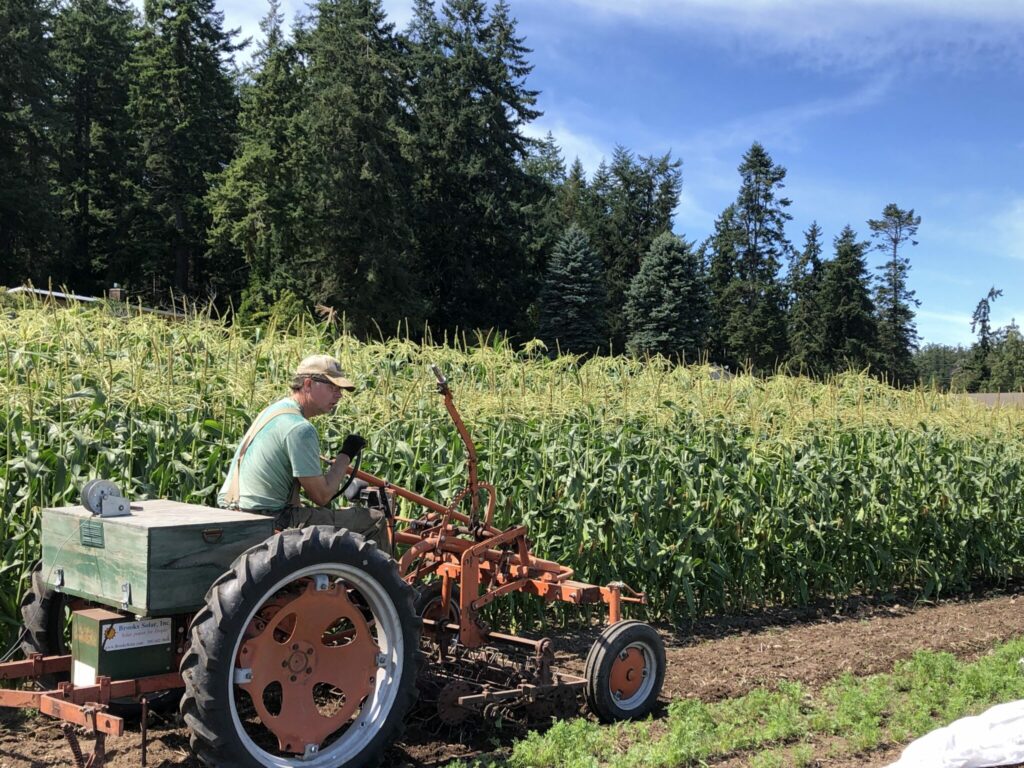
Brian and the Alice Chalmers G Electric Tractor.

Wondering what kind of fancy tractor implements we use on this little organic farm? I know you are. The curiosity has likely been eating away at you all year, so apologies for not getting around to the subject sooner. While most small farms rely heavily on hand labor for harvesting, weeding, trellising, etc. having a tractor is pretty nice for moving dirt around without throwing your back out. Very small farms, generally under a couple acres, often rely on 2-wheel tractors like a BCS or other model, for tilling, plowing or harrowing small areas. We also use a 2-wheel tiller for getting inside tight spaces like greenhouses and tunnels, but mainly we use our 45 HP Branson tractor for tillage type of work.

The main implements for the Branson tractor are as follows:

Flail Mower – Chops up cover crops and cash crops into small pieces for quick breakdown into the soil.

Brush Hog – Faster and coarser than the flail. Good for mowing large areas of grass.

Chisel Plow – 2’ deep, 18” shanks that break up compaction and help aerate subsoil.

Rototiller – Used shallowly to incorporate weeds, cover crop, or vegetable residue into the soil. Also the final step in bed preparation to create a nice soil texture for seeding.

Cone Spreader – Spreads fertilizer (lime, feather meal, dolapril, etc.) evenly over a 30 ft width. Holds 400lbs of fertilizer per load.

Middle Buster – A big shovel like tool that is dragged to create trenches for potato planting. Also doubles as a potato harvester!

We also have a 15HP electric cultivating tractor that we drive over young crops to weed between rows. Gotta plant in straight, parallel rows for it to work!

We’re always geeking out on new tools to possibly add to the arsenal, but equipment is expensive and usually doesn’t pay off unless it’s a great fit for your farm system. We’re eyeing a Power Harrow for 2024, which is like a fancy rototiller, but creates less soil disturbance and compaction.

Posted on

Food Preservation in a Hurry

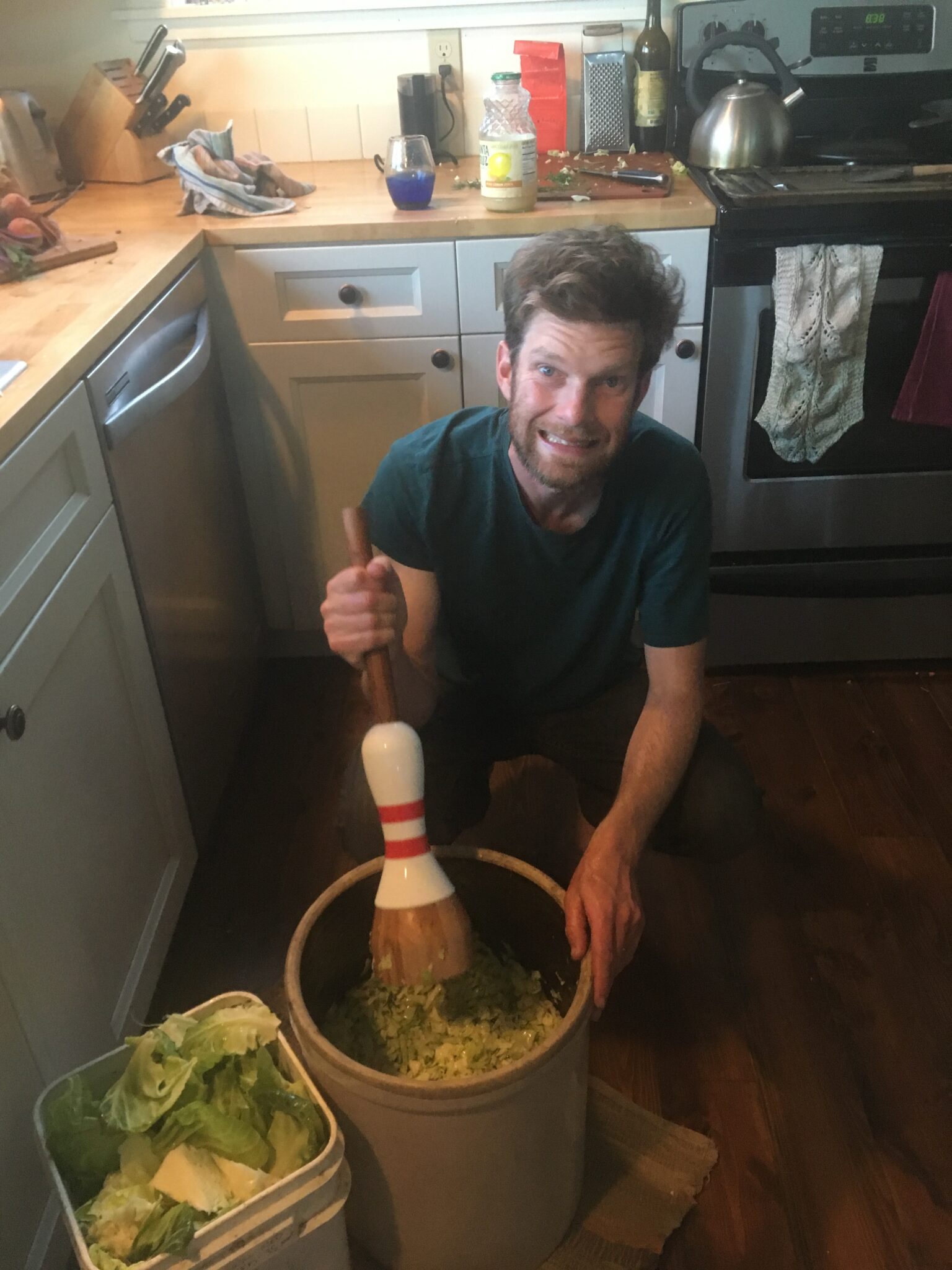
Nathaniel and our custom kraut smusher.

I’m sure I’m not the only one of us who has made it through all of summer only to now notice the pantry is absent of any preserves and the freezer lacks any sign of this year’s harvest. Never fear! Time Constrained Preservation Princess is here (yep, that’s what I’m now going by).  Now is as good of time as any to capture the tastes of summer in quart jars and freezer bags. I never do anything too complicated, as time is still limited and precious, but my oh my do I love myself in the winter for doing the deliciously easy stuff now. So… here’s what I prioritize in preservationville (not quite as exciting as Margaritaville, RIP Jimmy Buffet).

Basil

Pesto!! We make boat loads and just freeze it in pint sized freezer jars. No water bath shenanigans, super easy peasy (and basily). I also dehydrate tons of basil and jar it up for future pizzas, soups, pastas and gifts. It’s so much sweeter and more flavorful than the old store stuff.

Tomatoes

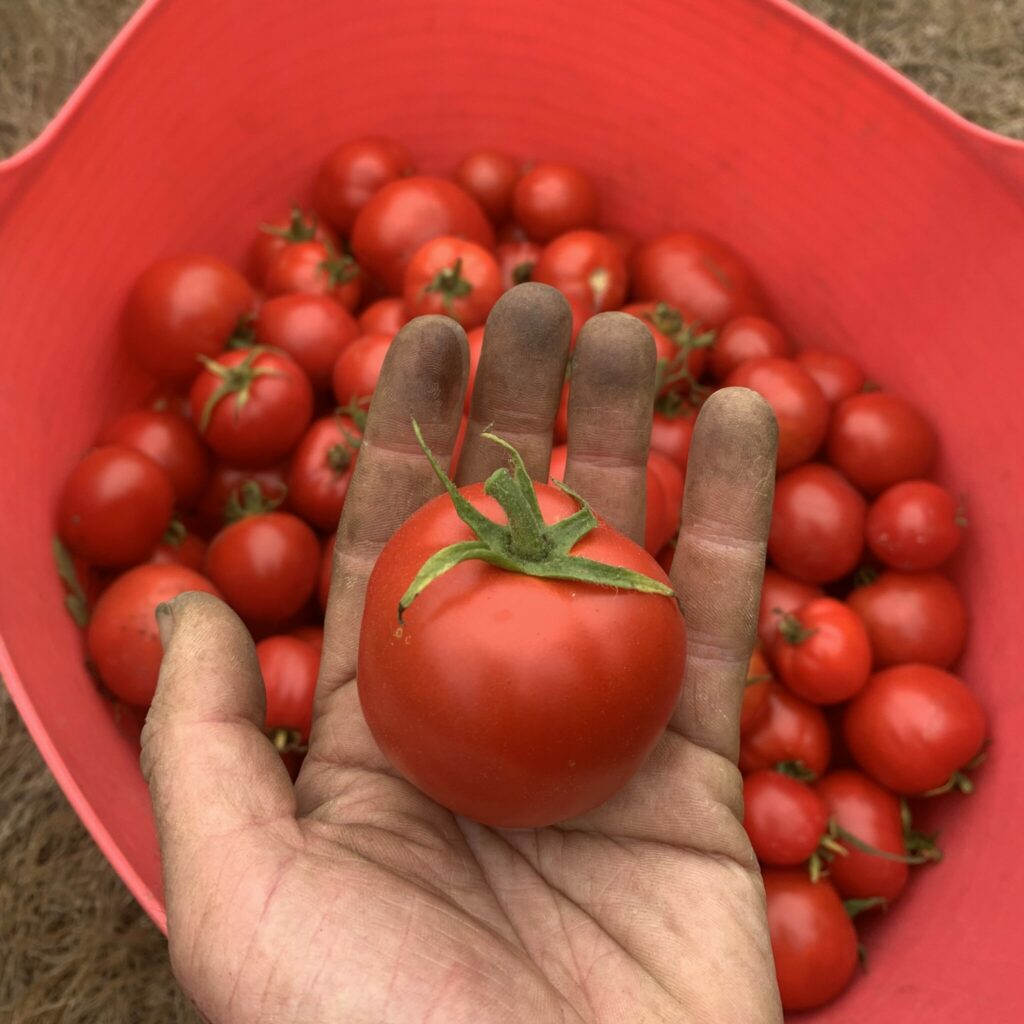
Next, we freeze tomatoes whole in ziplock bags, especially cherry tomatoes, but we do this with the big guys, too. You literally don’t have to do anything expect take off their green stems. We pour the frozen flavor bombs into soups and stews come cold season. Boomshakala!  I also roast tomatoes whole with a little olive oil and salt until they’re pretty much caramelized. Once cooled, I jar or bag this sludgy bliss and toss that into the freezer for casseroles, pizzas, soups, etc. Lastly, I cook down tomatoes whole with the skins on (most recipes tell you to remove the skins, but I’m not that kind of girl).

I use the immersion blender to break ‘em up if I want sauce and leave some in full tomato form for stewed tomatoes. Once they’re cooked down to my liking, I put the tomatoes in sterilized jars, add 2 TBS of bottled lemon juice per quart, seal it up, and water bath the beauties for 20 minutes. Yes, this is a bit of effort, but for farm fresh, heirloom tomato gloriousness, it’s worth it.

Cabbage

We’re all about making loads kraut, kimchi, curtido, and more kraut. They all maximizes the health benefits of cabbage with all its probiotics that make food more digestible and improves your guts ability to absorb nutrients. Fermented foods are also easy to make. I use the Sandor Katz’s book “Wild Fermentation” for the specifics, but their are oceans of recipes on the ol internet. This is an excellent mode of preserving cabbage and more for 4-6months.

Carrots, Radishes, Cucumbers, Onions, and Garlic

Other than that, I’m pretty into quick pickling carrots, radishes, and cucumbers, dehydrating garlic and onions for garlic and onion powder. I’d love to hear your preservation passions and secrets to keeping the harvest!

Posted on

Why We Love Being CSA Farmers in the Fall

Welcome to your life as a Fall CSA member, the club of squash soup supporters, allium enthusiasts, root rooters, and hearty green heart throbs. It’s an eclectic posse of folks we’ve got here, unafraid of fennel and cool with kohlrabi (or so we hope!). The Fall season holds a special place in our woolen hearts. When Nathaniel and I started off as a wee lil farmer lad and lass we thought we may very well be exclusively cold weather growers. The cold season veg market was wide open, the foods were our faves, and it felt thrilling to picture pulling veggies out from under layers of row cover and mulch amidst the whipping winter wind. Some of you were there with us, up at Greenbank Farm where it all began.
Year one, we enjoyed a shockingly mild winter, allowing us to pull off a substantial CSA well into February without really knowing what we were doing. Beginners’ luck for sure! Year two, Mother Nature didn’t hook us up in the same fashion and instead dumped heavy snow for our last share of the season. This shut down the roads to all but four-wheel drive vehicles (which we didn’t have) and public transit. We proudly delivered shares up to the Coupeville Hospital on the bus.  A year or so after that, we had to cut our season off a week earlier than expected thanks to a six-day hard frost that killed even our heartiest roots under the thickest winter row cover.

Thus, over the past 12 years running a fall/winter farm share program, we’ve grown cautious about pushing the season late into the year. We’re admittedly also a little soft now that we’re more aged and our backs and hands feel the realities of cold weather. BUT- we are still passionate about farming this time of year! The harvests are so much less hectic without the slow-to-pick summer crops (we’re looking at you beans and zucchini). We don’t need to rush irrigation to and fro. And the crops are all weeded and mature, just hanging out waiting to be picked.

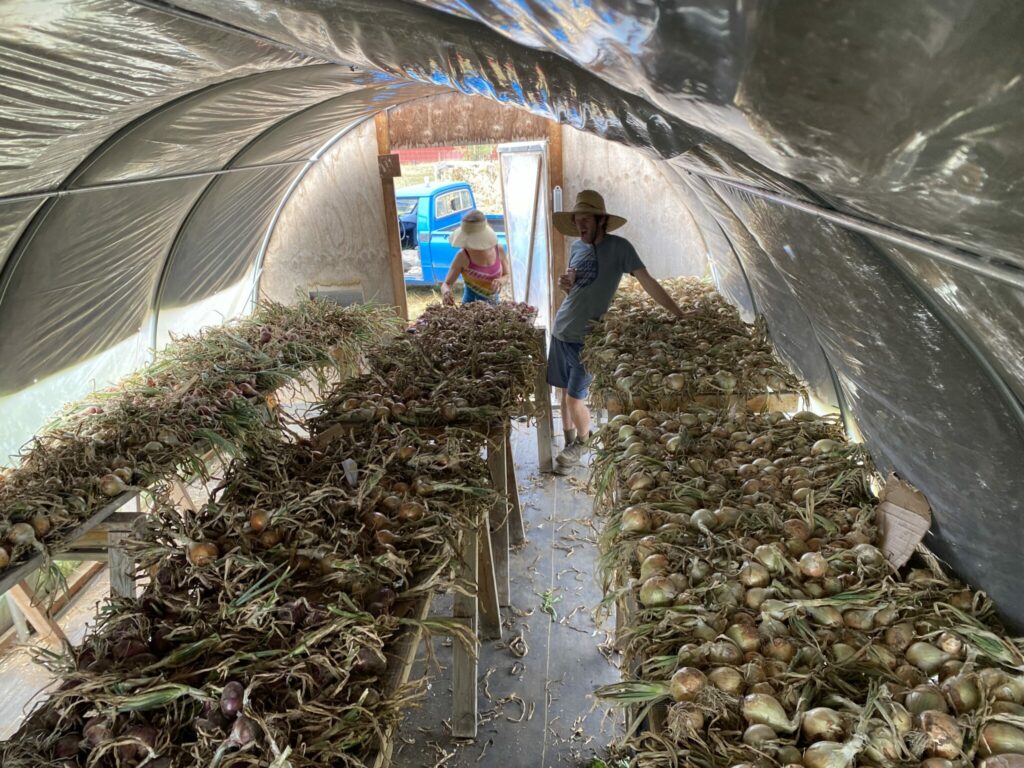
It fills the heart with elation to look around and see 600 cabbages ready to kraut, 800 brussel stalks begging to be roasted, and a whole tunnel of cleaned onions, garlic, squash and shallots aching to be masticated (I know, those guys are odd). We’re breathing easy, sleeping more, and feeling thankful for the cooling weather and shifting day length. Hope you can say the same.

Posted on

Chicories are Trending

For those of you unacculturated to the wonderful universe that is Chicorylandia, we’re so glad you made it. For you who’ve been here before, welcome back to town. It’s a trendy little locale! A few weeks back, the NYTs even proclaimed chicory is “in season and in style”: https://www.nytimes.com/2023/10/18/t-magazine/radicchio-chicory.html. And it had its very own hipster festival in Seattle: https://www.chicoryweek.com and social media presence #bitterisbetter and @chicoryweek.

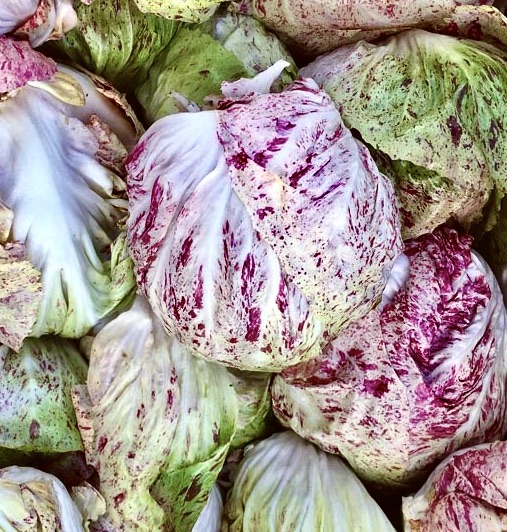
But what is it? And what’s up with it? Chicories are a passion of these farmers of yours. They’re a big ol beautiful family with origins in Italy. They’re generally slightly bitter (but that doesn’t equal bad!), always leafy, and enjoyable raw or cooked. Frisee (aka curly endive), Belgian endive, escarole, and radicchio are all relatives found in the chicory family tree. If you’d like to eat them raw, a sweet and rich topping is recommended. Apples, pears, citrus, strong cheese, candied nuts, crème fraiche, fried bacon, and warm vinaigrettes are all stellar companions to these beautiful leaves when eaten in salad. If you cook them, the bitterness subsides and a nutty, earthiness shines through. Risottos, soups, and baked pastas are all traditional ways to show your regards to this winter hardy crew. Like I’ve said to our longer term farm share members, you like bitter things! Remember coffee and chocolate??? Don’t deny yourself the beauty and experience that is chicory indulging, just because you aren’t used to bitter in greens. It takes a little time, the right recipes, and an open mind, but you can do it! But if you’re still not convinced, we won’t judge you for eating bok choi this week instead.

Posted on

The Cyclone that wasn’t

As of right now, it looks like we’ll be just fine for our standard pick-up this week.  We, along with the rest of the Northwest were fired up about our first potential harvest in a bomb cyclone, but alas, we bunched carrots in underwhelming 20mph gusts and sideways rain. Catch ya next time, bc!  To prepare for the gusty guest that didn’t show, we, along with farmers throughout the PNW took the plastic off all our caterpillar tunnels, which was mighty adult of us, if I do say so myself. Normally, we wait until a windstorm decides to remove half of the plastic for us and then we go join in in a chaotic scene that is hazardous to human safety, but my, is it exhilarating!! We also pre-filled all our washtubs with water so we’d be ready to tidy up your share in a dark, powerless wash station, but that also didn’t need to happen. Lastly, we removed about 20 – 125 foot long sheets of row cover that were protecting our carrots from rust fly and our brassicas from root maggot. We once had a piece of row cover form its own ghostly tornado, take flight, and land in the top of an 80 year old Doug Fir. Not our finest hour. So yah, basically, I’m saying, we, like all of you, made some little preparations and we want a high five for it. Don’t leave us hanging!

Posted on

Fall Vibes

Fall vibes are cranked to 11.  A season’s worth of carbon and solar energy has culminated into a bunch of roundish, delicious things. They’ve been reaped, cleaned and stored for the next several months of photosynthetic downtime. The winter squash is picked and artfully stacked in the greenhouse for curing while the onions and garlic are boxed, labeled and oh so orderly stuffed under our garage ping pong table. Hundreds of pounds and over 80 varieties of seeds are almost completely harvested, threshed, screened, winnowed, dehydrated and tucked into 4 gallon buckets where they may live in our entryway for the next several weeks, and proper storage racks for the next several years, awaiting their shipment to another random plot of dirt in the U.S. Potatoes are being dug and stowed away in garbage bins with a bit of wood shavings.

Nathaniel and his bff!

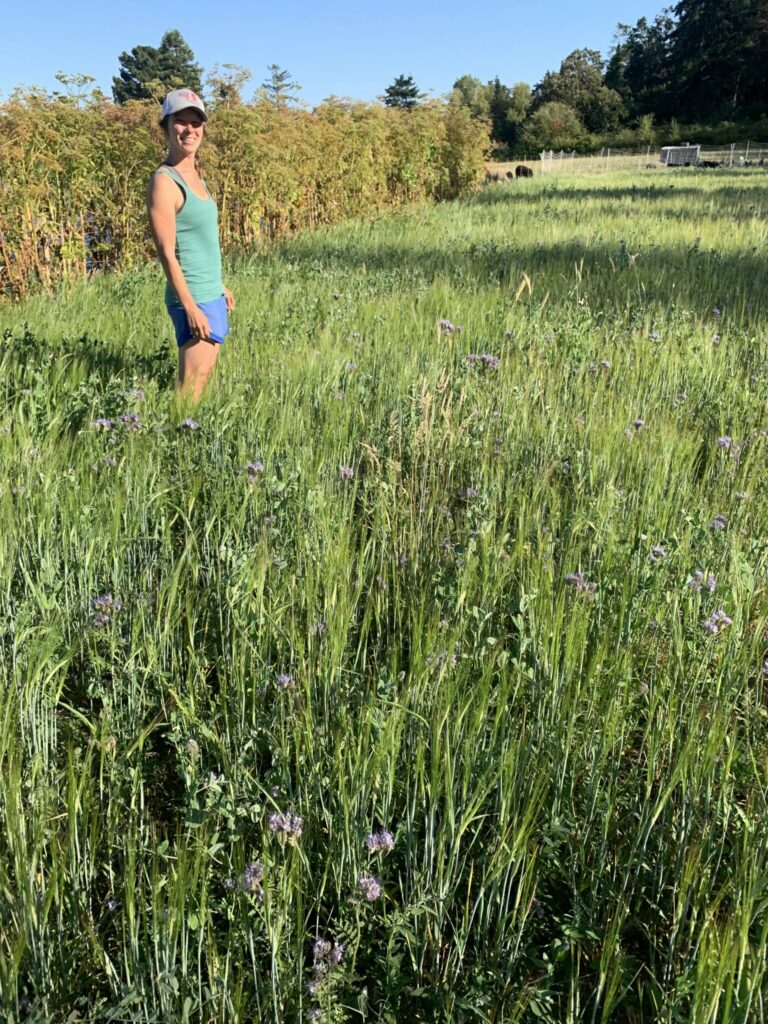
Out in the fields, the fall clover, rye, oats and vetch are coming up thick and green (almost looking like we know what we’re doing after so many years of patchy, mistimed cover crop seedings!). The sheep have moved off their summer veggie/cover crop paddocks onto a longer term winter pasture (our uncultivated back acre) so, as the daylight wanes, the fall cover crops can focus their precious energy toward growing leaves and not wool. Firewood is stacked, greenhouses are clearing out and the last of the hanging apples are quickly succumbing to yellowjackets and their ilk. Back inside, the meals are getting a bit less fruity and a bit more rooty as we revel in the season’s first rutabagas, winter radishes and parsnips. The barn is still a chaotic warzone. If it’s lucky, it may enjoy a few fleeting days of organization sometime in the dead of winter when nobody is around to appreciate it.

Posted on

Tomatoes (and bloggers) Gone Wild

Tomatoes (and newsletter writers) Gone Wild
You may have noticed that here at Deep Harvest
we are unequivocally pro-tomato. Eleven years into farming, we’re still experimenting with an obscene number of new varieties, ever searching for the best and the brightest (ie the most flavorful and highest yielding) solanaceous fruits possible this side of the Cascades. Why?  Because the people demand it!! Ok, not really. Simply because with think they’re fun, beautiful, delicious and generally beloved.  Am I right?  Tell me I’m right!  For some practical, but mostly whimsical reasons, this season we’ve sought varieties with traits we haven’t previously offered in our CSA or seed catalog.  For example, we trialed various apricot-sized fuzzy tomatoes (all too slow, not tasty enough), Cherokee Purple look-alikes hoping one was as delicious but not so crack prone (again, no dice), Big hand-sized heirlooms, because we think people love those (here there were winners, namely the big creamsicle colored Oma’s Orange and our favorite tomato named after a Russian Space traveler—Cosmonaut Volkov). We won’t bore you with the trials and tribulations of our 1oz determinant red tomato trial. You get it, we have an infatuation that at some point may need to be addressed. But for now… on to tomato care!

Tomatoes are far and away the gold medal winners in categories of neediest and riskiest crops. We seed these divas in early February on expensive heat mats in our start houses. Come March, they’re potted up into 4-inch pots (500 4-inch pots) and get watered early each day to avoid going into cool nights with wet leaves (they hate that!).  In May they’re deeply, carefully planted into greenhouses, tunnels or outdoors in black plastic with drip irrigation and trellised with t-posts and twine using the Florida weave (google that one!) or twisted up twine hanging from a special tomato trellising device called a tomahook.  We spare no expense to keep them feeling well supported! Once a week, May through mid-August the tomatoes get pruned. Our indeterminant (indefinite growing) tomatoes are snipped to two leaders— that is, we select two main growing stems and cut off all other suckers that appear in order to maximize airflow and minimize chance of disease. Our determinants and cherries just get pruned to make sure harvest is quick and easy and that good airflow is possible. And, and, and— my oh my yipes—I can talk, write and think about tomatoes forever. Please forgive me. My love is clearly vast and overwhelming and maybe oppressive. Sorry tomatoes. And sorry to those of you who are still reading this. Errr… ok….. tomatoes. We love em. They’re difficult. Time consuming.  Expensive to grow. But if they don’t get the ever-terrifying late blight, early blights or one of countless other tomato grower terrors, they’re terrific— tomatorrific??? Oof. Ick. Cutting myself off. Thanks for going on that journey with me. The end!


Posted on

August Daze

Mandatory August deep breaths. Will you join me? Breathe in…… breathe out…… Breathe in…… Breathe— AhhHHH never mind! No time! No time! Strap on the oxygen machine and go go go! Let’s see some hustle!  In preparation for .15 inches of theoretical rain, we got an early morning start to harvest 5,000 onions that could’ve rotted if wet, 225 ft. of cherry tomatoes that needed to be plucked for csa, and 500 feet of strawberries that don’t do well when damp (really, who does?).  That’s almost enough for a normal Monday right there, but onward ho we go!  We then employed gigantic silage tarps as rain jackets for beet and chard seed crops that are just ripe enough to be destroyed by rain, but not ready enough to harvest.  It’s a hefty job, but the details are a bore, so on we go through our Pinnacle Day for Productivity.  Nathaniel harvested lettuce and phacelia seed and threshed parsnip seed then headed off to another isolation plot with his bro to harvest plump umbels of mature carrot. Meanwhile Brian and I collected and processed millet, feverfew, scabiosa, and spinach seed to make room for new seed harvests to enter our seed drying caterpillar tunnel.  Our kind sister-in-law and work-traders shop-vac’d and swept up soon to be ripe nasturtium seeds from plants we grew in landscape fabric for easy seed collecting.  Brian sprayed coolers, lugs and pack shed tubs to get ready for Tuesday’s harvest and I shuffled irrigation lines around twice, knowing our predicted rain wouldn’t likely be enough for mature food crops.  How right I was… Now 8pm, Nathaniel and I sit on our bed with the door closed to muffle the noise of kids pretending to be kittens, while writing you this little note. He checks the weather. The rain passed us by.  Sigh… and breathe.

Posted on

It’s a Bird’s World

And…we’re home. We had a wonderful, whirlwind of a road trip to North Dakota and back. One of the perks for me (Nathaniel) was witnessing dozens of species of migratory birds not usually seen on Whidbey. The Montana and North Dakota grasslands, lakes and wetlands hosted thousands of ducks, shorebirds, song birds and raptors: Golden Eagles, nighhawks, rails, avocets, meadowlarks, buntings, bobolinks, and so many more.

Birds take up much of the conversational space here on the farm. Brian and I (and increasingly Annie) are avid birders. We consider these winged friends an integral part of the farm community and ecosystem. We all love scoping the harriers, eagles and hawks soaring across the fields and identifying the many sparrows, wrens and finches that perch and sing in our crops. Last year we added a few bird boxes to our fence lines. These were immediately adopted by migratory tree swallows. (The kestrel box was unfortunately hijacked by the invasive starlings.) This year the Cedar Waxwings have begun foraging for berries in our maturing hedgerows and warblers discovered our fruit trees.

But despite their endless majesty the birds often pose significant management issues on the farm. The biggest headache is caused by the finches (house finches and goldfinches) and their voracious appetite for our seed crops. If not preemptively excluded with massive 150′ x 50′ bird nets, finches will completely wipe out a bed of bok choi, borage, spinach or kale seed within a few days.

Our grass-nesting savannah sparrows also create a mowing conundrum. While we’d prefer to mow in April or May to prevent the dandelion from setting seed, the sparrows don’t reliably fledge their young until mid-late June. Mowing any earlier can destroy their nests and eggs or outright kill their chicks which haven’t yet learned to fly. And finally, the killdeers. These rowdy plovers build their camouflage nests in our fallow spring fields, at the beginning of the busy tractor season. We spend hours scouting for nesting sites (which are often revealed by the screaming nearby parents who fake broken wings to lure us away from the nest) and marking them with bright flags before discing, mowing, or plowing a field.

Despite the few annoyances, we thoroughly enjoy the diversity of bird species that forage, nest, sing, shelter or just fly over our fields. (FYI – we are strong advocates of Bird-Be-Safe collars for those of you with outdoor kitties. They have significantly cut down on Patty’s bird kills, AND they are supremely fashionable!)