Posted on

Choosing Crops to Grow

What Crops and Why?

The last 15 years of farming are full of trials and errors, errors and trials, learning and growing and learning and… not growing. That’s a wordy way of saying, crops have come on and crops have gone off the farm plan for all kinds of reasons. The following are factors we consider when deciding if we’re going to grow a crop and if so how much we’ll plant of it.

One, do people like it? We use our trade zone of CSA pick-up each week as a mini member survey to see what you’re all leaving behind. A big pile of anything means it’s not likely to make the cut for next season, thus, the absence of mustard greens, celeriac, salsify and winter turnips in the shares this year. Can’t say we’re shedding any tears!

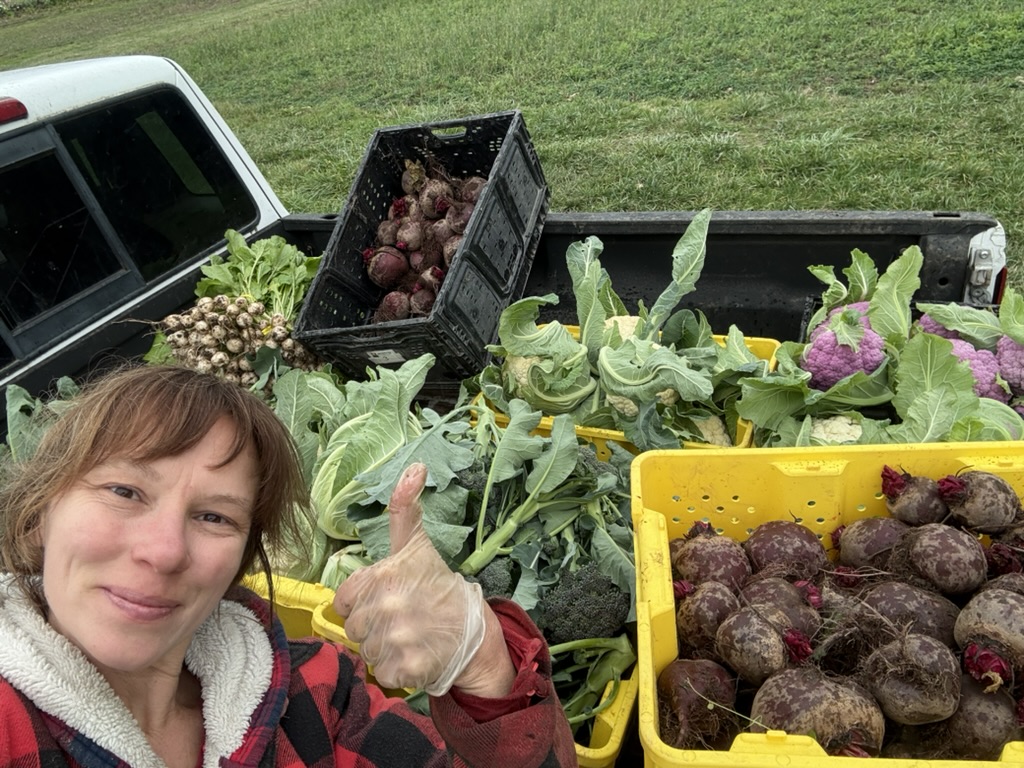
Two, is it profitable? This isn’t a huge factor when we plan our CSA harvests as we predominantly prioritize crops that are pleasing to your personal palettes and that contribute to a well-rounded and diversified farm share box. However, when choosing crops for the grocery stores, restaurants and food hub, this is THE consideration. We intentionally plant carrots, beets, chard, kale, broccoli, cauliflower, lettuce, cabbage and brussels sprouts for these causes as they are ever popular and fetch good rates on a per bed basis, making them worth the lower wholesale prices.

Three, how much space does it take up? We don’t grow tons of potatoes or melons on our farm as they don’t yield well, are prone to pest damage, take up a lot of room, and don’t come anywhere close to penciling out.

Four, do we personally like growing and managing them? Nathaniel has a deep passion (to which I cannot relate) for growing corn and quinoa for seed, but I support it! And I have a newfound love for growing giant pumpkins and have serious plan to host a giant pumpkin regatta next year- stay tuned! These crops don’t make sense financially, but we grow them to keep ourselves enthused. Claire, Kevin and I must’ve checked on our big quirky pumpkin friends a couple times a week throughout the summer. We miss them!

It’s a delicate dance to weigh all these factors when working on the season’s plan, but it makes for lively conversations over coffee in the off season.
Posted on

Wireworms are at it again!

Arghhhh!

Our seasoned farm share members know their way around an ugly potato and we’re hoping the rest of you are up for the challenge as well. A few of this year’s potato beds have been discovered by… wireworms. Boooo. Hissss. But whatever! We’re cool, we’re cool. Dealing with pests is part of this organic farming game and we accept it. Life can’t be flowers and strawberries all the time!

So, a refresher on the orange, crispy, little larvae that share our love of potatoes. Wireworms are the babies of click beetles which are small, copper-colored beetles that thrive in pastures with high organic matter. Unfortunately, high organic matter soil is what we organic farmers also love.

When we first started farming our current property, they were a new pest to us and existed in our soil in truly catastrophic quantities. We planted around 10,000 lettuce transplants that first summer here (we were used to growing lettuce for the grocery stores) in hopes that maybe a new bed or later timing date might help our lettuce growing cause. Nope! We grew absolutely zero lettuce. Or corn. Or potatoes. Oh and we had to pick about five gross worms out of each of our brassica transplants’ roots a few weeks after planting them in order to pull off any broccoli, cabbage, kale, brussels or cauliflower. Talk about crazy making! We persevered and found things that worked better than others, CSA members were understanding, and we’re still standing!

The more we’ve worked our soil, the fewer wireworms we’ve had to deal with, but they’re around lurking in the fields edges, which leads us to this week’s potatoes. Potatoes MUST be their favorite food, (next to pasture grass roots) and are recommended as a wireworm trap crop. A trap crop is something grows with the purpose of attracting a pest away from something more precious. Too bad the ideal trap crop is the food crop we’re going for in this situation. Thankfully, the damage is fairly superficial, albeit hideous. If you can’t stand the looks of these ugly roots, trade em away, or just get out your peeler and enjoy the goodness just below the potato skins.

Posted on

Succession Planting

Folks often ask how we keep spinach and cilantro from bolting in the middle of summer or how we pull off lettuce all season long. Is it shade cloth? Constant irrigating? Secret farming sauce? The answer… succession planting (see how the word success is even in the name?!).

Whereas many backyard gardeners plant their whole garden in spring and call it good, farms and super productive gardens require more planning and planting. Some vegetables like winter squash or tomatoes should be planted just once as the growing season only has enough warm days for a single crop. Here at Deep Harvest, we plant most veggies multiple times throughout the season. This ensures they’re always in their fresh, vegetative state of growth when we need them. Take arugula, which we plant not once, not twice, but a whopping 16 times, March through September. Arugula bolts quickly, so this schedule is needed to ensure there’s always a bed of tender leaves for orders.

What about biennial crops like carrots and beets that don’t bolt their first year, you ask? Why not just plant all the carrots we need in March and harvest them throughout the entire season? Well, even root veggies don’t hold in the ground forever. After about a month, a mature carrot becomes a woody, hairy, split open, rust fly larvae-infested, or otherwise unsavory experience. Thus, we plant them every three weeks March through July to ensure they’re always prime. Another secret to effective succession planting is variety choice. Whereas our sweet, tender Hilmar makes a great spring/summer carrot, we favor Danvers for our final fall planting. It holds up much better in wet, cool soils. All the seeds in our Deep Harvest Seeds catalog perform well in our climate, but some need to be planted in the correct season to ensure a good crop.

If succession planting sounds like far too much effort, but you still dream of a bountiful gardening season, try planting crops that you can harvest for long harvest windows. Kale, chard, cucumbers, basil, zucchini, and tomatoes are the all-stars of Team Productivity. Go team!

Posted on

Bush Beans, Pole Beans and Dry Beans

Allow us a moment to wax (wax bean?) poetic about one of our favorite tastes of summer.

Garden fresh beans. What’s not to love? Stir-fried, sauted, fresh, roasted, pickled– there’s no way to do them wrong. Then why does the English language cast these tasty morsels in such a bad light?  Being “full of beans“ or never amounting to “a hill of beans” aren’t exactly compliments. Getting “beaned” in baseball is nobody’s definition of a good time. And calling someone a “bean counter” can be downright rude. Why the bad vibes, people? Maybe our language-creating ancestors only ate beans from aluminum cans. Literal food for thought… But I digress. Back to regular programming—- Garden fresh beans!

Did you know that there are different beans for different uses? To the culinistas (did we just invent a word??) out there, you may want to take some notes. Our catalog has a bean for every occasion:

Snap Bush Beans  – These produce concentrated harvests of juicy beans for fresh-eating, sautéing, freezing or canning. An early May sowing will give you 3-4 weeks of picking starting in July. If you want continued harvests through August and September, consider sowing second and even third successions in June and July. Provider and Buerre de Roquencourt are our earliest-to-mature varieties while the fancy French filet bean, Velour, needs 1-2 more weeks to set fruit. For those of you who are all about flavor, Lewis bush bean won our on-farm bush bean taste test- TWICE!

Snap Pole Beans – Pole beans are the quintessential garden crop. While they lack the speediness of bush beans they make up for it in prolonged yields all summer long.  Be sure to give them something to grab onto and climb up before they send out their vines. A back fence, bamboo stakes or twine draped from a trellis all work just fine. Kew Blue produces stunning semi-flat deep purple crunchy delights and Cobra’s green beans are the tastiest and earliest maturing pole beans we’ve found! Use ’em in any which way.

Dry Beans (Bush or Pole, but all our varieties are Bush) – These morsels are intended for a late summer harvest, after the plants have dried down and the beans are brown and crispy.  Our Rockwells are a Slow Food “Ark of Taste” variety, renowned for its delectability as a baked bean.  Dragon Langerie is juicy and tender for eating fresh and can also be dried or shelled.

Posted on

Plants for People and Pollinators

If you’re having trouble deciding what to grow this season, here’s a gratifying option to living up your landscape: plant things both people and pollinators adore! You can share!!

Get this, many veggies and herbs will go on to flower and attract a myriad of beneficial insects if you leave ‘em the ground long enough to do so. You’ve probably discovered this phenomenon all on your own, forgetting about that old arugula or salad mix until after it’s bolted and flowered and then – boom- it’s suddenly abuzz with life!

We often leave entire beds of broccoli and cilantro to continue growing waaayy past their harvest window (on purpose- no really!!), inviting in a diversity of bees, flies and beetles that in turn pollinate our other food crops and prey on pesky pests like aphids, mites and caterpillars.  Over-mature crops can even help to bolster native pollinator populations, many of which are in decline due to habitat loss and a lack of floral resources. If you have the space and a tolerance for a slightly messier garden appearance, consider leaving the following crops in the ground beyond the point of edibility:
Cilantro, Dill and Parsley: These three herbs are in the family Apiacea, known for its “umbel”-shaped flower heads which can attract a wide diversity of beneficial bees, syrphid flies and parasitoid wasps, which prey on aphids!! After cutting these plants back a few times for food they’ll start to bolt and flower. Just sit back and enjoy the magic!

Annual brassicas – arugula, mizuna, mustards, salad mix, tatsoi, choi sum and gai lan: These quick-to-mature leafy greens of the family Brassicacea are often the first to bolt in the garden, leading to a proliferation of white and yellow flowers. Bees or all shapes and sizes including honey bees, bumble bees, sweat bees and mason bees will find their way to these flowers.

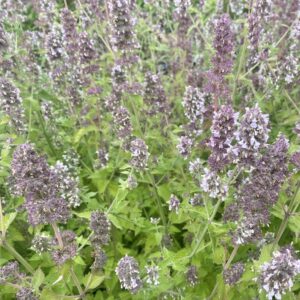
Basil, Holy Basil and Catmint – These herbs are in the Mint family, producing spikes of gorgeous, purple flowers that bloom a good long while. Pinch the first few flowers off your basil plants to encourage branching, which will yield more pesto for you and flower production for the pollinators.

Edible Flowers The blooms of Calendula, Borage, Bachelor Buttons and Nasturtiums are all edible, adding bright colors and subtle flavor to your summer salads, drinks, and party cakes. They also happen to be some of the best pollinator crops out there! The butterflies and their friends will thank you (in their own subtle way).

One final word to the wise. While leaves and stems lead to flowers, flowers happen to lead to (drum roll, please)…seeds! Keep an eye on those plants as they’re blooming and consider yanking them before the first seed pods start drying down to prevent seed dispersal in your garden. That is, unless you want to try saving your own seeds or don’t mind volunteers next spring!

Posted on

How to Grow Cool Cucumbers and Superb Summer and Winter Squash

Seeding: Come May 1st, here on Whidbey Island we start cucumbers and summer squash seeds in 2” pots in our greenhouse on heat mats set at 75 degrees.  Sowing indoors allows us to get plants growing when the outdoor soil is still too cold, while also giving these crops a head start on the pests and weeds. If you don’t have a heat mat or greenhouse, a bright, warm window ledge should suffice. If you’d like to direct-sow cucumbers and squash, wait until the soil is at least 60 degrees, ideally a bit warmer.

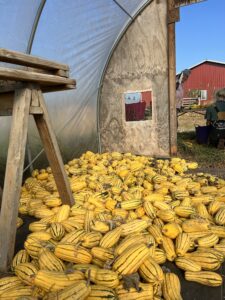
Placing and Spacing: When cucurbits have filled out their 2” pot, we plant cucumbers outside spaced one foot apart and the squash between 18” and two feet apart, depending on type. Intuitively, summer squash require less room than giant vining winter squash. Both crops love full sun. We prefer growing long Asian and English cucumbers on trellising in the greenhouse to keep them straight and easy to pick, but you don’t have to.

Harvesting: To my serious chagrin, we need to harvest these crops every other day to get ‘em in their prime eating state. If you don’t mind a giant zucchini boat or slightly suboptimal cucumbers, you can get away with picking less frequently. CSA members, grocery store customers and chefs prefer these speedy growers small and firm, so at least two months of our summer our lower backs are feeling the burn as we fill bin after bin of these tasty fruits.

Posted on

Tomato Tending

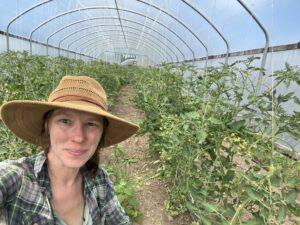
Thanks to a wet, mild June we’re still a little ways out from tomato season, but even still, we are spending an inordinate amount of time with our tomato plants. They’re kind of the divas of the farm scene. Every week, four 125ft beds of field tomatoes get string added to their t-post trellis system (check out “Tomato Florida Weave” if you want to see our technique) and 5 beds of greenhouse tomatoes get their two main stems gently twisted up strings tied to the greenhouses’ purlins to maximize airflow. Lower leaves and suckers get snipped off all tomato plants as does anything remotely damaged or diseased. With around 750 tomato plants, that’s a lot of time spent.

Do we really need to do all that? Indeedio, we think we do. The PNW just doesn’t get enough heat units to guarantee quality tomato production, so we really have to coddle and beg them to realize their potential for us. Without picking the right varieties and pruning off excess growth, they are very likely to fall victim to early blight, late blight, verticillium wilt, fusarium wilt, any number of other ailments, or just produce low yields or low quality fruit. Even with all this effort there’s no guarantee one of these fungal catastrophes won’t strike – it’s only happened twice in the 14 years we’ve served as Senior Tomato Cajolers. So far so good!

Posted on

The Importance of Regionally Grown Seed

Hey, that’s a fair question! Thanks to whoever telepathically sent it. I have a feeling you know what us regionally-focused seed growers are going to say, but then again, maybe not! We try to be straight talkers over here and want you to have the facts whether they serve us or not.

While of course we’d be giddy if folks got all their seeds from local seed companies, buying regionally appropriate varieties matters more for some crops than for others. For example, if you plant whatever lettuce, spinach, or radish seed your local hardware store sells, you’ll probably do just fine. Those are quick, easy crops that don’t require a long ripening period or a ton of heat units to do their thing.

However, random tomato, pepper, eggplant, melon, corn and winter squash varieties are higher risk propositions. Ripening Brandywine Tomatoes in Tacoma or California Bell Peppers in Portland are far from guaranteed. However, with a Scotia Tomato (named for chilly Nova Scotia) or a Mini Red Bell Pepper (nice and small for quick ripening) Northwesterners and other cooler location growers have a high chance of high yields. The shorter the Days to Maturity the merrier for these heat lovers.

So yes, you can grow watermelons in Washougal, WA, so long as it’s the right variety.

Posted on

Stratification, Scarification, and Vernalization- oh my!

Did you hear the birdies start chirping last week? Here at Deep Harvest, the robins are back to singing sweet songs of cereal (their AM chirps sounds like “cherrio, cherrio”) and the sun is showing its face. We know this means that you likely want to get your hands popping seeds into that cold muckiness. Ok, ok- at this point, we’ll allow it.

Lucky for you eager growers, some flowers actually like the cold soil. Who are these brave blooms? They go by the names Poppy, Larkspur, Rudbeckia, Catmint, Chamomile, Eryngium, Sweet Pea and Nasturtium. They’re the open-ocean swimmers of the flower world, not only tolerating frigidness, but even basking in it. (I’m an open water swimmer of the human world, so I understand!). We direct sow all these seeds in early to mid-March. However, if you’ve had trouble getting any of the aforementioned flowers to germinate, you might want to take tending to them to the next level. This crew appreciates being stratified or scarified! Eeee. Sounds scary, but it’s merely scar-y. Here’s the skinny on how to grow the frigid-est of flowers.

Stratification is a process of seed stimulation to promote germination. Most seeds experience dormancy as embryos, which must be broken somehow. In nature, seeds spend significant time in the ground during winter rains and frost which softens their seed coats. In your home, you can mimic this process by dampening a paper towel,  sprinkling the seeds on it and folding the towel around the seeds. Place this bundle in a labeled plastic bag, seal it, then mark your calendar so you remember to take them out of the fridge after a month! At that point, you can start your flowers as you normally would. Larkspur, Rudbeckia, Catmint, Chamomile, Eryngium all may benefit from this process.

Scarification: Some seeds have extremely hard, protective coats, which can make it difficult for them to germinate. The whole point of a seed having a tough coat is to prevent it from germinating at the wrong time. To overcome this protective mechanism, you can nick the seed with sandpaper or an emery board. You can also just soak them in water overnight before planting. That causes seeds to swell, which in turn breaks the outer seed coat. Sweet Peas and nasturtium may benefit from this process. At Deep Harvest, we always pre-soak our sweet peas, whose coats are particularly hardcore.

You may also have heard of Vernalization which is process that initiates flowering in plants (rather than germination of seeds) by exposing them to prolonged cold temps. Vernalization doesn’t apply to seed starting, but if you’re interested in growing root crops for seed, explore this concept further here: https://www.growveg.com/guides/vernalization-of-winter-vegetables-for-seed-saving/

Posted on

Seed Starting 101

Plants want to grow! Once those little green machines sprout in the ground, there seems to be no stopping them. But what about getting them to germinate in the first place? This might be trickier, as each seed type has different environmental preferences. The seed starting basics:

Water – Once in soil, seeds want to stay moist. Too wet they will rot, too dry and the water can’t penetrate their hard seed coat. If bone dry is 0% soil moisture and drenched is 100%, it’s ideal to keep you soil between 50-75% moisture. That usually means watering once a day in the cloudy spring, and twice a day later in the season. Make sure you’re soaking the soil least 1” deep so that the little seedling roots can easily grow downward.

Temperature – Each species has a different optimal temperature for germination at which the seed will sprout in the fewest days. Go above or below this temp and the number of days for germination will increase. Too hot or cold, the seeds won’t sprout at all and may rot in the soil or go dormant. A good average temperature for most veggie seeds is 70F. We use heat mats set at this temp in our greenhouse to start our seeds, and stop using them altogether by the end of May or when the ambient temps are about 70F. While we recommend mats for heat-loving solanaceous crops, most cool season crops, like kale and lettuce, will germinate just fine at 55F. Keep in mind that the heat mats are only for germination. After germinating, remove plant from heat to continue growing at ambient greenhouse temp.

Light – We start our seeds in a greenhouse. Here they are exposed to natural light fluctuation. A bright south-facing window can also be a good option. Some sites don’ have a much sun exposure, especially in late-winter/early spring, so you may opt to start seeds indoors under grow lights. It is important to use full-spectrum lights with a high lumen output, and to also have a timer that runs 12-16 hours a day. If your seedlings are getting leggy it’s likely that they are not receiving enough light!

Remember its always an option to start seeds directly in the ground once soil temperatures are sufficiently high and the ground is easily worked! Around here, early March is the absolutely earliest to direct sow those cool-season crops.

You got this!