Radicchio. More like RADicchio. We love it and you may not… YET… love it, but perhaps you’re up for giving it another shot? Maybe you just haven’t found the recipe for you. Radicchio is still the trendiest crop in foodie-ville. Seattle’s hippest restaurants go all out for their annual Chicory Week, the hottest cold weather food celebration this side of the Mississippi. Long time CSA members have heard it all from me before. “Bitter is Better.” “Radicchio is full of anthocyanins, vitamin K, and micronutrients.” “It’s beyond incredible on pizza, pasta, salad, soups.” “They’re super expensive at the store, so especially precious in your share.” “The Italians love ‘em and you can’t argue with their cuisine!” and on and on…
Nathaniel and I are smitten with these beautiful leafy delicacies and we yearn for you to be, too. No worries if it’s not going to happen. They are indeed strong flavored, but you like strong, bitter coffee, don’t you? Eh? Anyway… We’re giving you a choice of chicories (radicchio, escarole and endive are all chicories) in hopes you can find one you’ll enjoy. Here’s the rundown of the options we’re offering this week.
Frisee: These light green, frilly heads are also known as Curly Endive. Frisee is mostly used in salad, especially in Salad Lyonnaise https://www.saveur.com/article/Recipes/Frisee-Salad-with-Poached-Eggs-and-Bacon/ and is one of the milder options in the chicory family.
Treviso: Football shaped and deep maroon, this is another mild-ish chicory and one that we love to sear or roast with balsamaic like this: https://www.marthastewart.com/346023/roasted-radicchio.
Sugarloaf: Considered by some to be the gateway radicchio, due to it’s mild and sweet flavor. It resembles a Napa Cabbage with it’s tall, lime green appearance. If you need some inspiration, give this a try: https://vancouverradicchiofestival.ca/portfolio-item/sugarloaf-pasta-with-lemon-and-almonds/
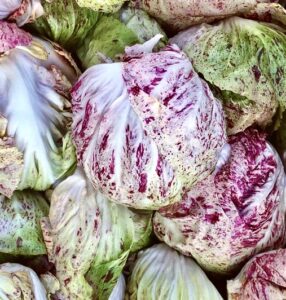
Adige Medio: This “Lusia-type” radicchio is round, light green/cream head with pink speckles and is often eaten raw in autumn salads with persimmons (https://beyondsweetandsavory.com/castelfranco-radicchio-persimmon-salad-with-blue-cheese-and-hazelnuts/#recipe), fennel and/or oranges. That bitter taste (in all radicchio) is due to a chemical compound called guaianolide: an antibacterial, antimalarial and anti-inflammatory in time for the first frosts of autumn. It’s also great cooked in risotto because it’s more delicate than red radicchios.