 Squash your Ignorance!
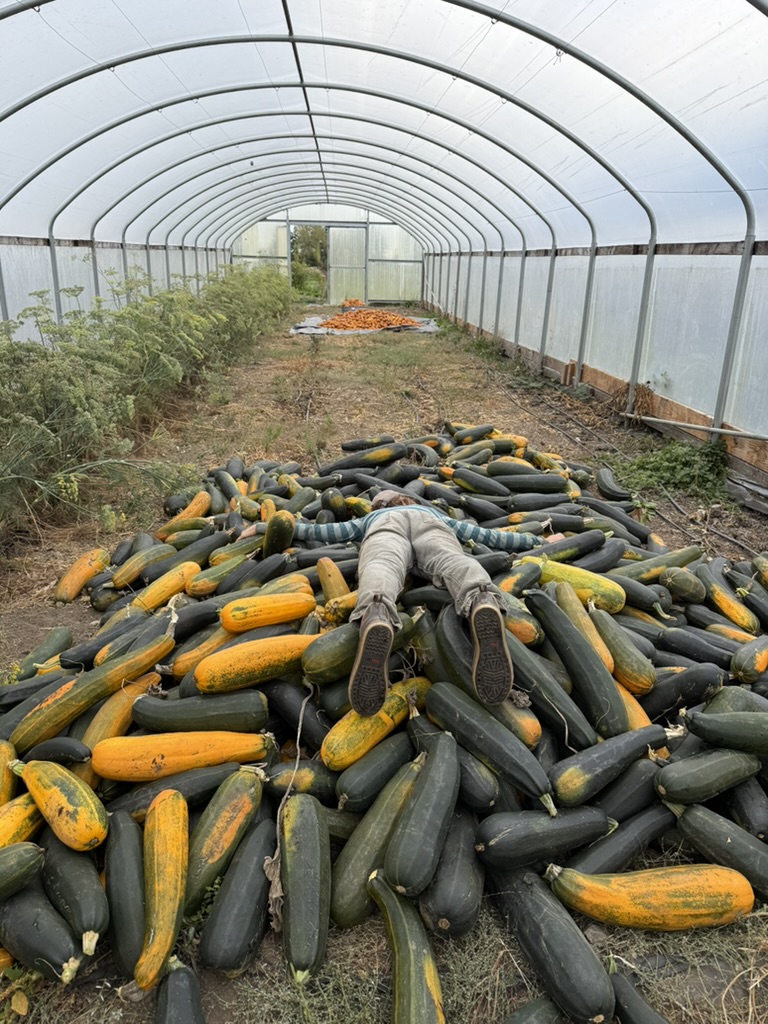
We’ve been saving seed on Oregon Homestead winter squash (aka Sweet Meat) for over 10 years, growing it out in isolation every 2-3 years to collect the seed (using a hatchet and Shopvac!) and bestow the sweet flesh to our CSA. We adore this variety for its rich flavor, abundant yields and early maturity in our climate. It was improved by the great PNW plant breeder Carol Deppe who selected it for small cavity size ( = more food), vigorous growth and good germination in cool soils. It’s great in soups or just baked and eaten with salt and butter. It won’t store since it’s been cut into…so eat promptly!
Squash are a tricky crop to grow for seed due to their out-crossing nature (bees move pollen between plants) and the fact that they flower before they produce food (a fancy way of saying they’re fruits). Since they readily outcross with other squash of the same species, it’s imperative that we grow them in isolation from other squash if the goal is to save seed. Luckily, we have some amazing CSA members down the road that have leased us a small plot of land to grow seed in isolation from the Deep Harvest/Foxtail Farm veggie HQ. I can even drive the tractor there to prepare fields in the spring!
Squash come in 3 common species, so it’s crucial that we know what species each variety belongs to so no crossing occurs. Sweet Meat squash, along with buttercups, kabocha, hubbards, kuris and other big, dense soup squashes are all in the species Cucurbita maxima. Delicata, acorn, pumpkins, zucchini, summer squash are all C. pepo. Don’t save seed from a pumpkin grown next to an acorn, unless you want some funky offspring! Lastly, butternut squash and their kin are all C. moschata, a particularly difficult species to save seed on in the PNW due to their long days to maturity.
The fact that squash are actually fruits means that they flower before they make squash. Broccoli, beets, fennel, mustards, etc in contrast all flower after they form their vegetables. This means we can grow a broccoli or mustards seed crop next to another broccoli or mustards of a different variety for food, as long as we don’t let that food crop flower. Not so with squash. A squash intended for seed saving will happily cross with a squash meant for eating. This applies to all other fruiting crops in the Cucurbitacea family such as melons and cucumbers. You must grow them in isolation for seed.